
It’s not optional anymore. You must be a pro at it if you want to resist today’s flood of state propaganda.
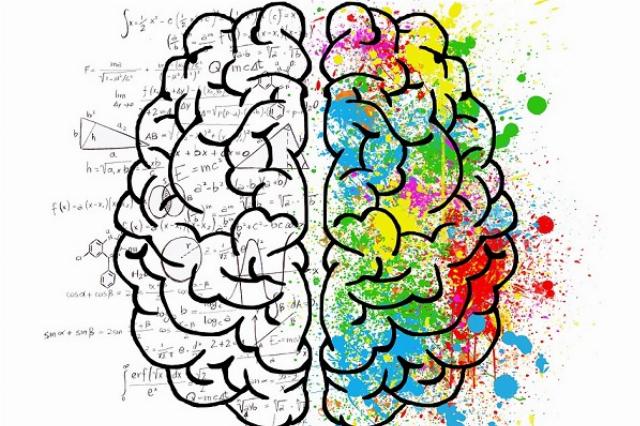
At its core, critical thinking means analyzing ideas and opinions without taking anything at face value.
First Amendment expert Greg Lukianoff and social psychologist Jonathan Haidt note that the Socratic method fosters critical thinking by pushing individuals to question their own unexamined beliefs, as well as the accepted views of those around them.
The principle of critical thinking has never been more important than it is today — because the cost of failure is no longer abstract.
Battle for Your Mind
We are living in an era of what many analysts describe as cognitive warfare — a landscape where influence is waged not just through physical force or traditional media, but through information itself.
Narratives are engineered, amplified, and delivered at scale, often designed to provoke emotion before reason has a chance to engage. With the exponential growth of digital platforms, propaganda is no longer slow or obvious. It is continuous, highly adaptive, and personalized —shaping not just what people think, but how they think.
The speed is the weapon. The volume is the pressure. The objective is compliance without awareness.
In this environment, the ability to think critically is a form of defense against manipulation.
As Mark Twain warned, “whenever you find yourself on the side of the majority, it is time to pause and reflect.” Today, that warning carries new weight. What feels like majority opinion is manufactured, amplified, and reinforced until it becomes indistinguishable from truth.
Modern propaganda does not need to convince everyone. It only needs to overwhelm, confuse, and erode your habit of questioning.
Discipline of Resistance
Resisting that pressure requires deliberate effort.
According to Steve Pearlman, critical thinking is a structured discipline. In a 2025 TEDx talk, he outlines four essential steps:
First, analyze and observe. Pay close attention to what is being presented, without immediate judgment.
Second, question and clarify. Challenge assumptions and identify potential biases.
Third, evaluate and examine evidence. Separate supported facts from unsupported claims.
Fourth, consider alternatives and draw conclusions. Weigh competing explanations before forming a reasoned judgment.
These simple steps directly counter the mechanisms of modern influence. They slow down reaction, interrupt emotional manipulation, and restore independent judgment.
Loss of Your Freedom
In order for someone to take your freedom, you first have to surrender it. Usually, that surrender happens incrementally, without awareness.
When individuals stop questioning, stop evaluating, and stop thinking critically, they become easier to influence, easier to divide, and easier to control. Once those conditions take hold, reclaiming clarity gets harder.
Critical thinking is what interrupts that process. It is what allows individuals to discern intent, evaluate credibility, and resist manipulation before it takes hold.
Fight or Surrender
In the age of cognitive warfare and increasing propaganda, critical thinking is a personal responsibility. Increasingly, it is the line between independence and total state control. Once you lose your ability to protect your mind, someone else has control over you — for life.
Failing to practice thinking critically is not a neutral act. It is surrender.
For more on the battle for your mind and other key battles, refer to the #1 Amazon bestseller The Red Tsunami: The Silent Storm Killing Your Freedom for those you care for. Time is of the essence.
Leave a Reply
You must be logged in to post a comment.